
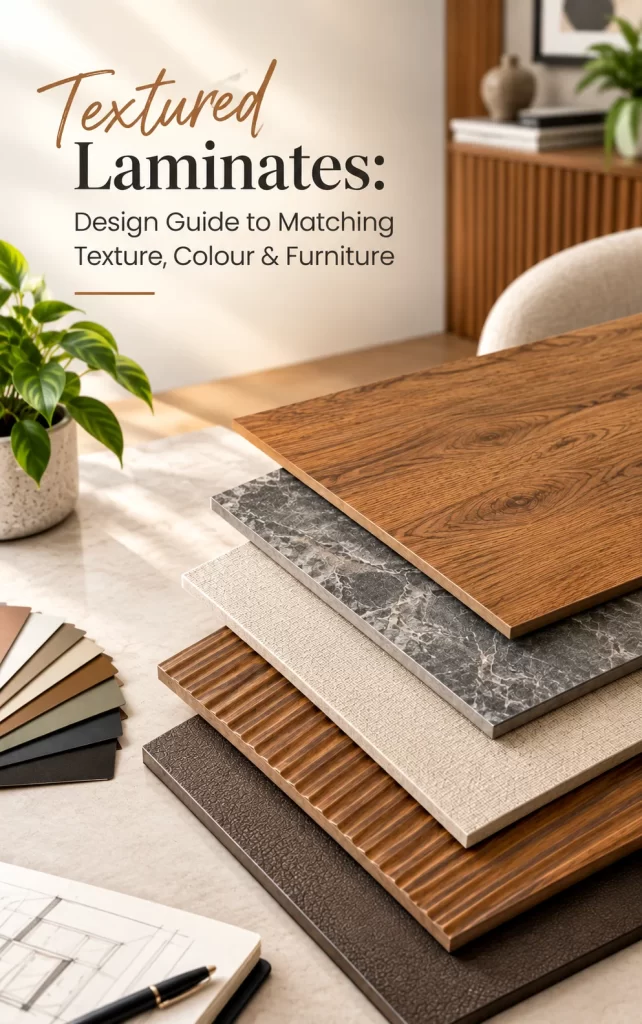
With the use of laminates trending, brands are working on offering different designs. The popularity of flat laminate surfaces is fading as people consider textured laminates. Modern interiors demand aesthetics, durability, and depth, and textured laminates are a perfect choice for the same. They offer a layered look to wardrobes, kitchen cabinets, TV units, study tables, doors and other furniture without making the design look complicated.
But the real challenge begins when it comes to choosing a texture that goes well with the colour, furniture style and overall interior. If you are also facing problems with the same, it is time to check our texture laminate design guide to choose the best one for your interior needs.
What is a Textured Laminate?
Textured laminate is a decorative laminate sheet that comes with a tactile or raised texture available in different patterns. With their constantly increasing demand, they are now available in wood texture, stone texture, leather texture, fabric texture, marble texture, and many more. Their surface finish adds depth or character to the surface where they are applied. They differ from smooth-finish laminates and are highly sought after for depicting natural materials.
Types of Textured Laminates
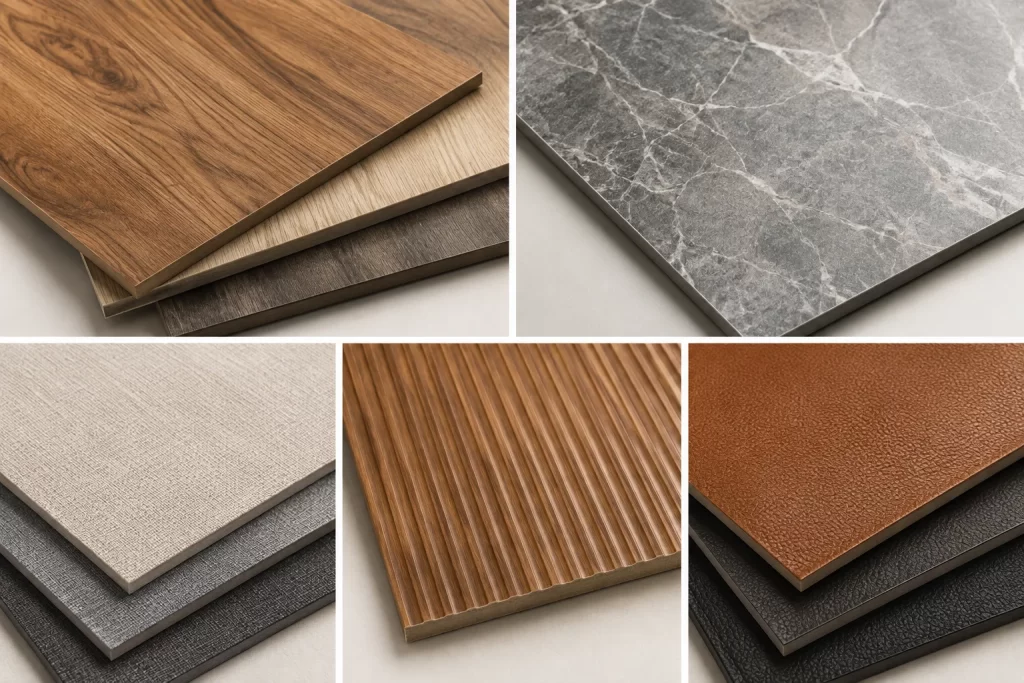
Buyers searching for textured laminates are often found searching for ‘how many types of textured laminates are there?’ No one wants to go for the common laminate options and wants to explore more options to get the best. Here are some of the textured laminates that you can choose from when exploring options at Ristal Laminates:
- Wooden Textured Laminates
- Stone Textured Laminates
- Fabric Textured Laminates
- Fluted Textured Laminates
- Leather Textured Laminates
How to Match Texture with Furniture?
When finding that perfect laminate, buyers often face a dilemma in matching it with the required furniture. To help them with this, here is a guide to match textured laminates with furniture:
- Wooden Furniture – For this furniture, choosing laminates with woodgrain texture is highly recommended. It works well with wooden beds, tables, and cabinets.
- Minimalist Furniture – These are simple furniture pieces that require clean or subtle design textures. It is advised to choose fine texture designs inspired by linen or understated patterns that maintain the minimalist appearance without adding noise.
- Modern Furniture – Be it the TV units, cabinets, or any other modern furniture, they need strong textured patterns with detailing, which can amplify the overall look of the modern furniture. Geometric texture is best suited for modern furniture.
- Classic Furniture – When we talk about classic furniture, choosing natural texture, mainly woodgrain or stone-inspired, is the best to go for. They perfectly complement carved, wooden or heritage-style furniture.
How to Choose the Right Colours Along With Texture?
At Ristal Laminates, we understand that both texture and colour are important when finding the right textured laminate. Any mismatch in these can make the interior as well as the furniture look bad. To help you with this, we are sharing a colour guide that matches different types of texture.
- Walnut, Teak or Oak – It is best for woodgrain textured laminates suitable for use in bedrooms, living rooms and study room furniture where a warm and natural appearance is required.
- Light Oak, Ash or Beige – These colours go well with fine or subtle texture laminates for minimalist bedrooms and compact spaces where a lighter tone is preferred.
- Cream, Taupe or Soft Grey – They work well for wardrobes and bedroom furniture to add an elegant finish.
- Grey, White or Charcoal – These colour textures are mainly available in stone textured laminates, which are recommended for kitchens or modern living spaces.
- Black, White or Grey – For those looking for colour options for contemporary furniture or statement wardrobes, these colour choices are a good match. Most geometric textured laminate designs are available in these colours.
Common Mistakes to Avoid When Choosing Textured Laminates
Along with the above shared tips, one must also avoid the common mistakes we have stated below when finding the right textured laminates. The common mistakes include:
- Do not mix many textures together, or else the interior will look crowded.
- Always consider lighting when choosing textured laminates, as it appears different under natural and artificial light.
- Avoid using bold texture laminates everywhere.
- When choosing textured laminates for new furniture, never overlook old existing furniture.
- Do not ignore matching texture and colour if you wish to create a balanced finish.
Conclusion
To enhance the overall look of your interior, it is advised to follow the above shared guide to find the best textured laminates. Begin by choosing furniture style, lighting, colour, and other furniture or elements available in that space. At Ristal Laminates, we are there to assist you in finding a perfect textured and patterned laminate for all your interior requirements. The availability of a wide range of patterned laminates in multiple colours allows us to beautify Indian homes in the right way.
Frequently Asked Questions
Yes, textured laminates have become highly popular for modern interiors due to the availability of subtle textures that complement minimalist spaces, geometric textures for modern furniture, and natural textured patterns for a kitchen and classic bedroom look.
Select MR, BWR, or BWP grade based on moisture exposure and usage area.
Woodgrain, fabric-inspired and fine matte textures are popular choices for wardrobes; however, it also depends on the bedroom’s furniture and décor.
Yes, the selected laminate is suitable for kitchens. One can choose contemporary or geometric pattern or natural stone textured laminates for kitchen spaces.
Dark textured laminates create a visually heavier appearance, particularly in poorly lit spaces. Pairing them with lighter walls or contrasting furniture can provide better balance.
Yes, but it is generally better to combine textures with different visual intensity rather than using several competing patterns.