
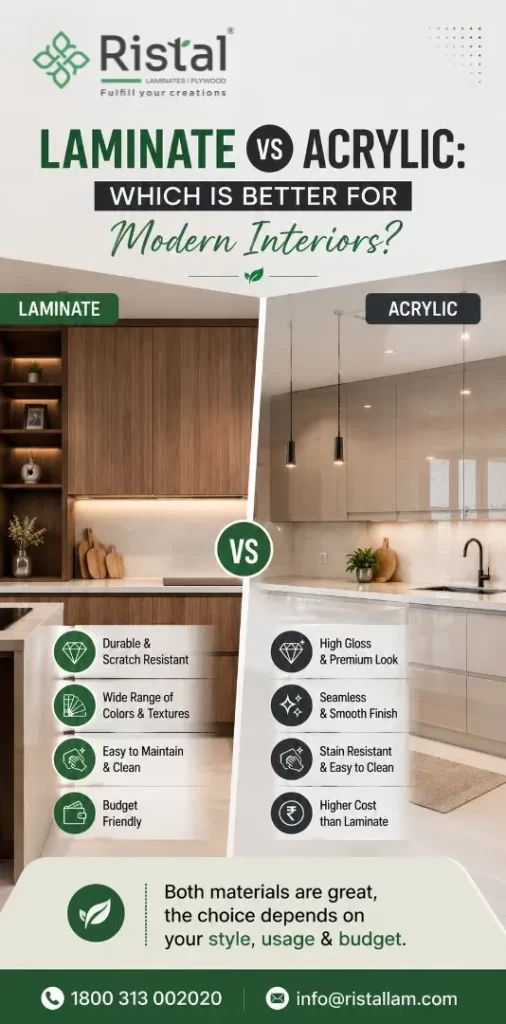
Choosing the right surface finish can change the character of an interior. It can make a kitchen feel warmer, a wardrobe look more refined, or a piece of furniture stand out without changing its basic structure.
Among the many surface materials available today, laminates and acrylic are two of the most widely considered options. Both can create contemporary interiors, but they offer a very different combination of appearance, finish, maintenance and cost.
So, when it comes to laminate vs acrylic, which one is the better choice?
The answer is not simply about which material looks better. It depends on where it is being used, how much everyday use the surface will see, the desired finish and the budget available for the project.
Let’s look at the differences.
What Is the Difference Between Laminate and Acrylic?
Before comparing the two, it helps to understand what each material brings to an interior.
Laminates are decorative surface sheets available in an extensive range of colours, patterns, textures and finishes. They can replicate the appearance of natural materials such as wood and stone, as well as offer contemporary textures, solid colours, metallic effects and other decorative surfaces.
This variety makes laminates suitable for everything from kitchen cabinets and wardrobes to office furniture, study units and wall panels.
Acrylic, meanwhile, is recognised for its smooth, highly reflective surface. It creates a clean, glossy appearance that works particularly well in contemporary kitchens, wardrobes and furniture.
In simple terms, laminates offer greater variety in terms of surface expression, while acrylic is largely chosen for its distinctive high-gloss appearance.
Laminate vs Acrylic: Key Differences
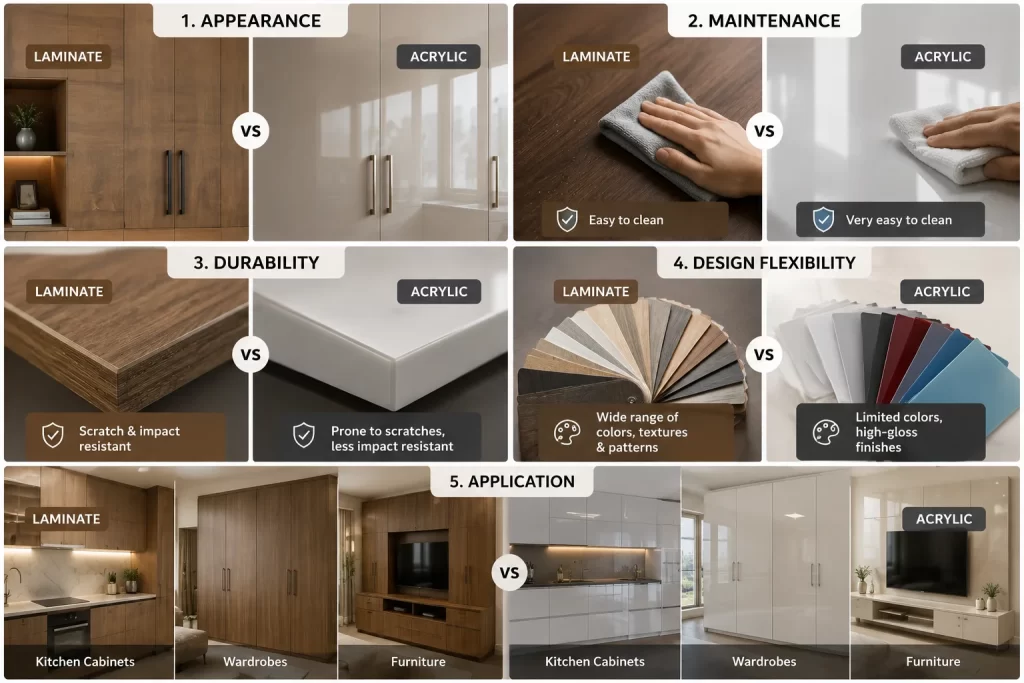
1. Appearance and Finish
The most noticeable difference between laminate and acrylic is the way they look.
Laminates are available in matte, textured, glossy, wood-grain and a variety of decorative finishes. This makes them relatively easy to incorporate into different design styles, whether the intention is to create a warm, natural interior or a more contemporary one.
Acrylic has a much more defined visual identity. Its smooth, reflective surface creates a polished, high-gloss appearance and can give cabinets and furniture a sleek, modern look.
For interiors where texture and visual variety are important, laminates provide more options. For designs centred around a clean, glossy aesthetic, acrylic can be a strong choice.
2. Maintenance
A beautiful surface also needs to be practical once the space is being used every day.
Laminates are generally easy to clean and maintain. Matte and textured finishes, in particular, tend to make fingerprints and minor marks less noticeable. This can be useful in busy areas such as kitchens, wardrobes and frequently used furniture.
Acrylic surfaces can also be cleaned easily, but their reflective finish tends to make fingerprints, smudges and water marks more visible. This is particularly noticeable with darker colours and high-gloss surfaces.
For homeowners who prefer a surface that does not require frequent wiping to maintain its appearance, the finish itself is worth considering.
3. Durability
The durability of a surface matters even more in areas that see regular handling.
Good-quality laminates are widely used for furniture and interior applications because they can withstand the demands of everyday use. Their performance, however, depends on factors such as the quality of the laminate, substrate and installation.
Acrylic is also a durable surface material, but its glossy finish can make fine scratches and surface marks more apparent over time.
This does not mean that one material is universally more durable than the other. The right product should be selected according to the application and the level of use it will experience.
4. Design Flexibility
This is where laminates have a clear advantage.
The range of laminate designs available today goes far beyond conventional wood finishes. There are stone-inspired surfaces, fabric textures, metallic effects, solid colours, tactile finishes and contemporary patterns, allowing designers considerable freedom when developing a material palette.
Depending on the range, laminates can also be specified with properties such as anti-fingerprint, antibacterial and fire-retardant performance for applications where additional functional characteristics are required.
Acrylic is available in a range of colours and is particularly effective when a consistent, glossy appearance is desired. However, it does not offer the same breadth of textures and surface effects as laminates.
5. Where Can They Be Used?
Both materials have a wide range of applications, although some uses are more common than others.
Laminates can be used for:
- Kitchen cabinets
- Wardrobes
- Office furniture
- Study tables and study units
- Cabinets
- Wall panels
- Residential furniture
- Commercial interiors
Acrylic is commonly used for:
- Modern kitchen cabinets
- Wardrobes
- Contemporary furniture
- High-gloss cabinetry
- Interior applications where a reflective finish is desired
The application should therefore be considered alongside the design before selecting the surface material.
Laminate vs Acrylic: Which Is More Expensive?

Cost is another important consideration when comparing laminate vs acrylic.
Acrylic is generally positioned as a premium surface finish and tends to cost more than standard laminates. Its distinctive high-gloss appearance is one of the factors behind its premium positioning.
Laminates are available across a much broader range of designs and price points. This makes them suitable for projects where aesthetics, functionality and overall budget need to be considered together.
However, the actual cost can vary depending on the brand, thickness, finish, grade, design and application. It is therefore better to compare specific products rather than assume that every laminate will cost less than every acrylic surface.
Laminate or Acrylic: Which One Should You Choose?
There is no universal winner in the laminate vs acrylic comparison.
If the priority is design variety, surface options, everyday practicality and flexibility across applications, laminates are a strong choice.
If the priority is a sleek, reflective and high-gloss appearance, acrylic may be more appropriate.
The decision becomes easier when the surface is considered as part of the complete interior rather than as an isolated material. Think about how the space will be used, how much maintenance it will require, the visual character you want to create and how the surface needs to perform over time.
For many modern interiors, laminates offer an especially versatile combination of design freedom, functionality and value.
Frequently Asked Questions
Yes, laminate is better for high-use interiors where durability, maintenance and design variety matters. Whereas, acrylic is preferred for interior where premium high-gloss appearance is required.
Laminate is easier for everyday maintenance, especially when you choose matte and textured finishes, as they are less likely to highlight fingerprints and stain marks.
Yes, acrylic is a more premium surface finish which makes it an expensive choice when compared to laminates.
Laminate is known for its versatility and can be used for kitchen cabinets, wardrobes, furniture, study units, wall panels and other surfaces that require a decorative finish.